In a Marketing Brew interview published on 30 October 2026, Kewpie Americas' Jeremy Stoddard described saves and shares as priorities for recipe content. He also discussed creator activity and the brand's US tour. This is a reported account of the team's approach in the United States, not a global effectiveness study. [1]
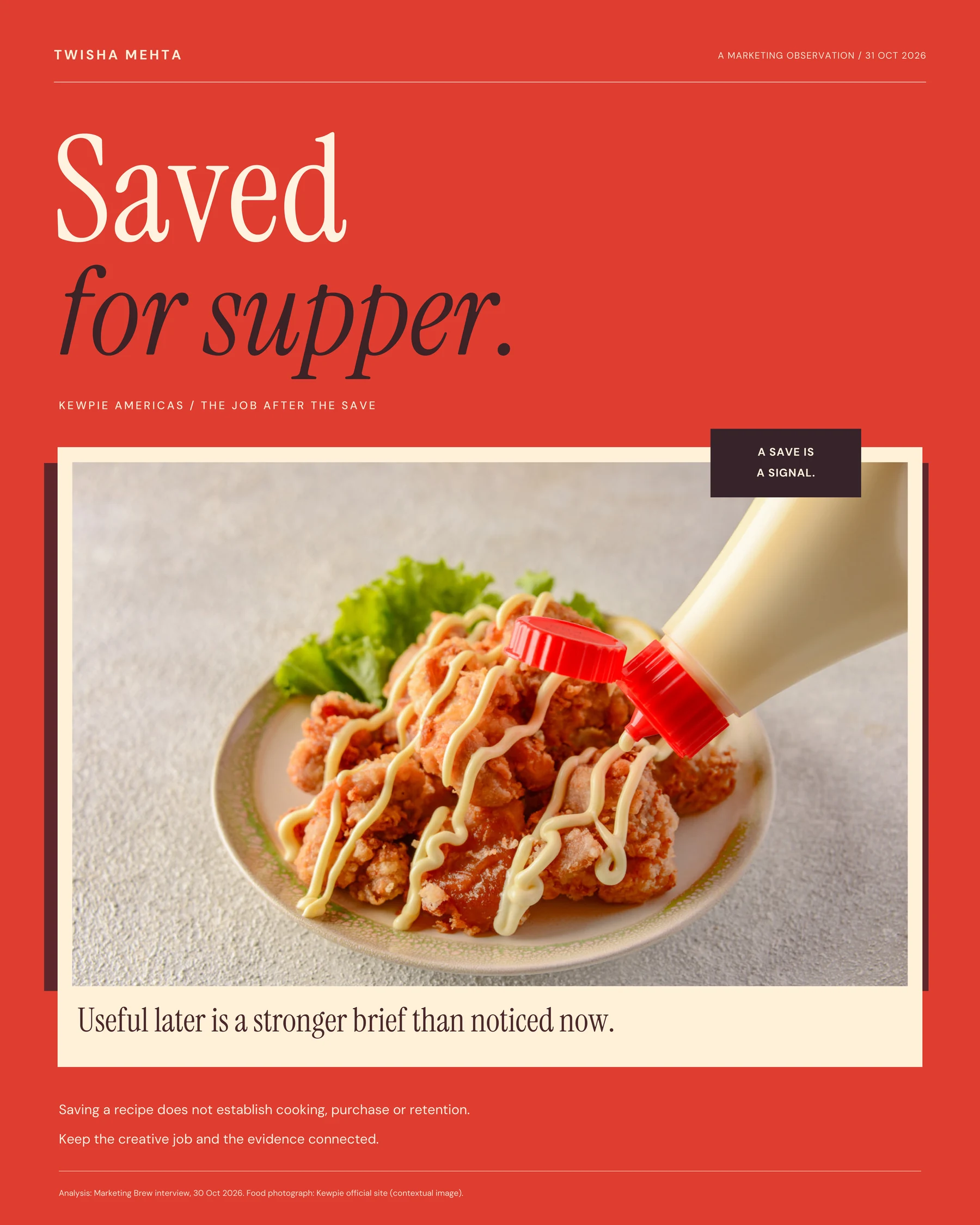
My interpretation is that a recipe can carry a useful future occasion: a person might return to it when deciding what to cook. That creates a more specific hypothesis than attention alone. A save still does not establish that someone cooked, purchased or bought again.
The original editorial graphic separates those possible stages to make the measurement problem visible. It is an analytical model, not a verified conversion funnel. Earlier tour reporting supplies context for the offline activity, rather than evidence of an incremental sales effect. [2]
Sources & context.
01Reported campaign details and an independent marketing interpretation. Featuring a brand does not imply a client relationship or endorsement.